Ready to see some tigers?
Be patient. Tiger sighting is an exercise in patience and luck. In India, you might call it Karma.
We spent close to 30 hours in the Nat'l Parks exclusively looking for tigers. (We saw many other great things along the way, but tiger was #1 on the shot list.)
I was fortunate to have 3 tiger sightings. One was at over 500 meters, which was exciting, but served mostly as a teaser. One was 'average' and the other was.... indescribable. (You'll see later.)
The following images describe an 'average' tiger sighting.
We travel with forest guards, expert trackers, and experienced naturalists.
We ride in open jeeps, from sunrise to sunset, with a lunch break during the heat of the day.
We search for signs of tiger, from scratches on the trees to pugmarks in the sand. Listening to the deer, monkeys, and birds is also a proven method.
Towards the end of the day.....
A tiger?
Oh $H!t, a TIGER!
Drat! Calm down and fix your exposure! Quick!
No! You missed it!
And.... he's gone.
Total time between the first shot and the last: 27 seconds.
Think about that. 2 days in a jeep for a 30 second view.
Also of note, there were over a dozen other jeeps at this sighting, which is right about 'average.'
The above sighting is a perfect example of what most people might see. Many people see less (as in, zero tigers). A lucky few see more.
I am one of those lucky few.
The last photo was taken during a different sighting. (duh)
Comparing the two sightings:
Average = 1 tiger, walking through the brush, in crappy light, for under 30 seconds, with 50 other people frantically pointing and yelling, jostling for position.
My lucky sighting = 3 tigers, in full view, in gorgeous light, FOR 26 MINUTES!!!!, with only 7 other people quietly shooting and whispering, taking turns, waiting for pristine moments.
I will share more from this lucky sighting, but not yet.
You'll have to wait for it.
Be patient.
December 17, 2010
December 16, 2010
Dec 16: India Part 2
After sorting 3000 images, I've discovered most of my favorites involve people. That surprises me, since I much prefer action and wildlife.
Here are two that stand out to me.
A young girl in an old temple.
A visitor at a tomb.
I'm pleased with my images of people. But don't worry, I have some good tiger photos too. Coming soon...
Here are two that stand out to me.
A young girl in an old temple.
A visitor at a tomb.
I'm pleased with my images of people. But don't worry, I have some good tiger photos too. Coming soon...
December 15, 2010
Dec 15: India Part 1
India was incredible. Everything exceeded my expectations, including the food, the people, the culture, the tradition, the architecture, the travel, the lodges, and luckily, the tigers.
In no particular order, I will share my favorite stories and images from the trip.
For the first post, I'll share a set of images taken from a moving bus. It's only fitting, as we traveled about 7 hours each day, in trains, planes, cars, buses, jeeps, and even bicycle rickshaws.
We saw a lot of countryside, whizzing by on both sides, with villages interspersed sporadically.
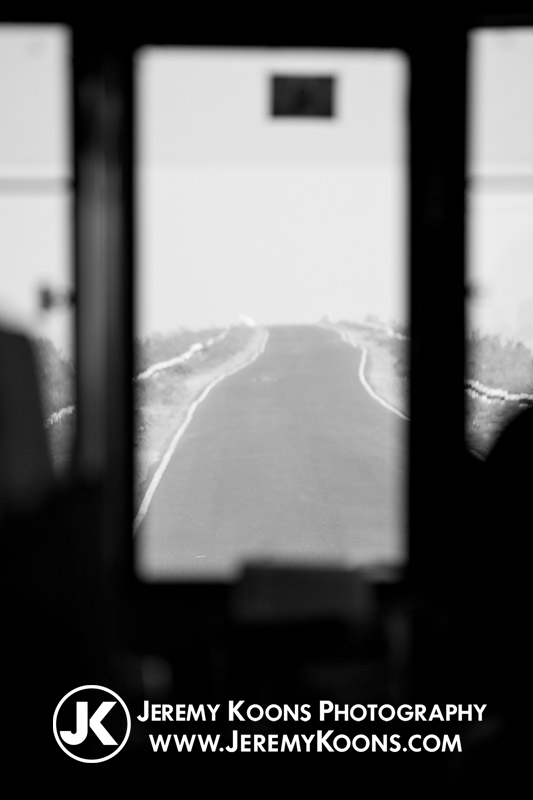
I often looked out the front window to see the road ahead.
Sometimes, though, it was better not to see the road...
(Notice that they're still smiling. We met a lot of happy people.)
When I dared, I hung a camera out the window.
It was worth it. I saw some beautiful things.
The last one is my favorite. I'll share it again soon, with a comparison to the original in full color.
For those interested in the camera technique, here are some tips.
Use a fast lens, (2.8), as it's difficult to freeze the scene at 50kph on a bumpy road.
Use an ISO that makes sense. 100 produces blurry images (too slow). 800 produces noisy ones.
If the lighting is relatively constant, expose manually and make your minor (+/- 1/2 stop) adjustments later.
If the lighting is changing rapidly, due to shade, tree cover, or a widely varying shooting angle (left, right, up, down), expose with Aperture priority. I found a +1/2 compensation was a good starting point.
Focus is tough. I liked Servo Auto Focus. Use the center focus point (it's the fastest in most cameras) and try to keep the subject in the center of the frame. It will bounce around and you'll miss a lot, but manual focus and 'One-Shot' are very difficult.
Use your drive mode to shoot in bursts, but don't be careless. Wait for good moments, then snap off 3 frames to increase your success rate.
More to come. Much more.
In no particular order, I will share my favorite stories and images from the trip.
For the first post, I'll share a set of images taken from a moving bus. It's only fitting, as we traveled about 7 hours each day, in trains, planes, cars, buses, jeeps, and even bicycle rickshaws.
We saw a lot of countryside, whizzing by on both sides, with villages interspersed sporadically.
I often looked out the front window to see the road ahead.
Sometimes, though, it was better not to see the road...
(Notice that they're still smiling. We met a lot of happy people.)
When I dared, I hung a camera out the window.
It was worth it. I saw some beautiful things.
The last one is my favorite. I'll share it again soon, with a comparison to the original in full color.
For those interested in the camera technique, here are some tips.
Use a fast lens, (2.8), as it's difficult to freeze the scene at 50kph on a bumpy road.
Use an ISO that makes sense. 100 produces blurry images (too slow). 800 produces noisy ones.
If the lighting is relatively constant, expose manually and make your minor (+/- 1/2 stop) adjustments later.
If the lighting is changing rapidly, due to shade, tree cover, or a widely varying shooting angle (left, right, up, down), expose with Aperture priority. I found a +1/2 compensation was a good starting point.
Focus is tough. I liked Servo Auto Focus. Use the center focus point (it's the fastest in most cameras) and try to keep the subject in the center of the frame. It will bounce around and you'll miss a lot, but manual focus and 'One-Shot' are very difficult.
Use your drive mode to shoot in bursts, but don't be careless. Wait for good moments, then snap off 3 frames to increase your success rate.
More to come. Much more.
November 24, 2010
Nov 24: Fun Vids
Ski season is here.
Here's a video from opening day at Alta.
Tele-Tortoise from Jeremy Koons on Vimeo.
And here's another from yesterday.
Pow Test from Jeremy Koons on Vimeo.
I look forward to modifying these shots when the weather improves.
Here's a video from opening day at Alta.
Tele-Tortoise from Jeremy Koons on Vimeo.
And here's another from yesterday.
Pow Test from Jeremy Koons on Vimeo.
I look forward to modifying these shots when the weather improves.
November 20, 2010
Nov 18: For Fun
The night before Alta opened, we went out for a quick dig.
The light was low and flat, but we brightened it up with laughter.
Justin.
John.
The tree didn't enjoy the jokes.
Labels:
john sheffler,
justin wright,
ski,
tree
October 7, 2010
Oct 7: First Snow
We're starting to see frozen stuff in the mountains.
Everyone is getting ready for the season, buying passes, sorting gear, making travel plans, and many of the athletes I work with are trying to bolster their sponsorship deals.
I've been trying to help them out.
For example, here's an image we made for Vanessa Aadland featuring a few of her favorite brands, like Causwell, Smith, and Skullcandy.
Just for fun, side:side = before:after = raw:edit.
Labels:
causwell,
ski,
skullcandy,
smith goggles,
snow,
vanessa aadland
September 21, 2010
Sept 21: Tiger Tales
I'm heading to India this fall.
I've been reading books about India: culture, architecture, wildlife etc.
I've taken special interest in reading about Tigers. (It is the year of the tiger, you know.)
A recent passage gripped me.
As the twentieth century draws to a close, an impressively large percentage of the world's most familiar wild animals are facing extinction. The creatures that we introduce our children to at bedtime as part of their initiation into the world -- lion, leopard, rhinoceros, tiger -- will soon exist only in zoos and in the wilderness of the imagination.
No human being will know when the last wild tiger meets its death. Perhaps in some remaining bit of hill forest in northern Burma a hunter will level his sights on the animal he has been seeking for months. Or perhaps in what was once a national park in the heart of Sumatra that last tiger, driven by hunger, will come to the poisoned bait hopefully set out for it. Or in northern India or Nepal that last remaining wild tiger, emaciated and starving, will be hacked to death by a group of local villagers. All that can be said with a minimum of certainty is that this last wild tiger is no mere hypothesis. Though perhaps not yet born, it will exist. And in all likelihood, it will die within the next twenty-five to thirty years.
For those human beings possessing the courage to look unflinchingly, the fate overtaking the world's wild animals presents itself with irresistible clarity. When, within the lifetime of many children living today, the last remnants of these creatures are trapped and gathered together for their own safekeeping and "the good of all humanity," that great nineteenth-century innovation, the zoo, will come into its own at last. In these hugely funded, highly polished institutions, veritable temples, where the ambient environment and physiological functions of the "living treasures" are monitored as carefully as rising and falling shares on the stock exchange, the zoo will become what it was destined to be from its inception -- a place of pilgrimage where human beings gawk in awed stupefaction at the irreplaceable, literally, priceless, living curiosities.
But that era will pass soon enough. Within a certain number of generations the descendants of these last wild animals, weakened, robbed of the riches of their genetic ancestry, will, in spite of every known technological intervention, every genetic advance and development, perish.
But it will be a strangely inconclusive death.
In that not so distant era, on a day like today, a tiger will roam free, stalking its prey with infinite patience through a pristine habitat in which the colors, sights, smells, and sounds are hyper-real and literally perfect. It will crouch, claws set to earth, and charge in a burst of speed, closing in with murderous swiftness for the kill... ... ...
The most perfect of three-dimensional illusions.
A blur of dancing electrons and shifting shadows.
In the awed silence of a darkened room.
Richard Ives. Of Tigers and Men: Entering the Age of Extinction
1996.
If you have an empty feeling, like I do, after reading that, please continue reading another section.
"So I take it," I say, "that you consider the situation in regard to tiger, the situation in Asia as a whole, as rather hopeless."
"You might say that."
"Do people you know agree with you?"
"I think they do."
"Then why don't people just say it? Why does everyone keep beating around the bush?"
He gives me a long thoughtful look and says, "Hope is something that people are very reluctant to give up -- even those who ought to know better. ... In regard to the forests of Asia, in regard to forests everywhere, we are now entering a sort of threshold era. Once the final threshold has been crossed, everything will be different."
"Meaning?"
"Meaning, simply, that when the last tree is felled, when the last wild place is finally conquered, it will become obvious for the first time in the history of our planet what the human species really amounts to."
"And what is that?"
Looking away, he says, "Something sadder, something infinitely more pathetic, than almost anyone has ever imagined."
I stare at him for a moment.
Additional recommendations.
Sy Montgomery. Spell of the Tiger.
Hemanta Mishra / Jim Ottaway Jr. Soul of the Rhino.
Hemanta Mishra. Bones of the Tiger.
Peter Matthiessen. The Snow Leopard.
Joy Adamson. Born Free.
Farley Mowat. Never Cry Wolf.
Craig Childs. The Animal Dialogues.
Dick Pitman. A Wild Life.
Jack Hannah. Jungle Jack.
Benjamin Mee. We Bought a Zoo.
I've been reading books about India: culture, architecture, wildlife etc.
I've taken special interest in reading about Tigers. (It is the year of the tiger, you know.)
A recent passage gripped me.
As the twentieth century draws to a close, an impressively large percentage of the world's most familiar wild animals are facing extinction. The creatures that we introduce our children to at bedtime as part of their initiation into the world -- lion, leopard, rhinoceros, tiger -- will soon exist only in zoos and in the wilderness of the imagination.
No human being will know when the last wild tiger meets its death. Perhaps in some remaining bit of hill forest in northern Burma a hunter will level his sights on the animal he has been seeking for months. Or perhaps in what was once a national park in the heart of Sumatra that last tiger, driven by hunger, will come to the poisoned bait hopefully set out for it. Or in northern India or Nepal that last remaining wild tiger, emaciated and starving, will be hacked to death by a group of local villagers. All that can be said with a minimum of certainty is that this last wild tiger is no mere hypothesis. Though perhaps not yet born, it will exist. And in all likelihood, it will die within the next twenty-five to thirty years.
For those human beings possessing the courage to look unflinchingly, the fate overtaking the world's wild animals presents itself with irresistible clarity. When, within the lifetime of many children living today, the last remnants of these creatures are trapped and gathered together for their own safekeeping and "the good of all humanity," that great nineteenth-century innovation, the zoo, will come into its own at last. In these hugely funded, highly polished institutions, veritable temples, where the ambient environment and physiological functions of the "living treasures" are monitored as carefully as rising and falling shares on the stock exchange, the zoo will become what it was destined to be from its inception -- a place of pilgrimage where human beings gawk in awed stupefaction at the irreplaceable, literally, priceless, living curiosities.
But that era will pass soon enough. Within a certain number of generations the descendants of these last wild animals, weakened, robbed of the riches of their genetic ancestry, will, in spite of every known technological intervention, every genetic advance and development, perish.
But it will be a strangely inconclusive death.
In that not so distant era, on a day like today, a tiger will roam free, stalking its prey with infinite patience through a pristine habitat in which the colors, sights, smells, and sounds are hyper-real and literally perfect. It will crouch, claws set to earth, and charge in a burst of speed, closing in with murderous swiftness for the kill... ... ...
The most perfect of three-dimensional illusions.
A blur of dancing electrons and shifting shadows.
In the awed silence of a darkened room.
Richard Ives. Of Tigers and Men: Entering the Age of Extinction
1996.
If you have an empty feeling, like I do, after reading that, please continue reading another section.
"So I take it," I say, "that you consider the situation in regard to tiger, the situation in Asia as a whole, as rather hopeless."
"You might say that."
"Do people you know agree with you?"
"I think they do."
"Then why don't people just say it? Why does everyone keep beating around the bush?"
He gives me a long thoughtful look and says, "Hope is something that people are very reluctant to give up -- even those who ought to know better. ... In regard to the forests of Asia, in regard to forests everywhere, we are now entering a sort of threshold era. Once the final threshold has been crossed, everything will be different."
"Meaning?"
"Meaning, simply, that when the last tree is felled, when the last wild place is finally conquered, it will become obvious for the first time in the history of our planet what the human species really amounts to."
"And what is that?"
Looking away, he says, "Something sadder, something infinitely more pathetic, than almost anyone has ever imagined."
I stare at him for a moment.
Additional recommendations.
Sy Montgomery. Spell of the Tiger.
Hemanta Mishra / Jim Ottaway Jr. Soul of the Rhino.
Hemanta Mishra. Bones of the Tiger.
Peter Matthiessen. The Snow Leopard.
Joy Adamson. Born Free.
Farley Mowat. Never Cry Wolf.
Craig Childs. The Animal Dialogues.
Dick Pitman. A Wild Life.
Jack Hannah. Jungle Jack.
Benjamin Mee. We Bought a Zoo.
Labels:
extinction,
india,
tiger
September 20, 2010
Sept 20: Peach Jam
If you haven't seen last year's peach-week photos, check them out here. There's more of a story in that set, as well as some nice images.
Below are some snapshots from this season's harvest.
Just jam this year.
160 mini jars. 1.5oz
5 dozen small jars. 4oz
650oz total.
For those who like to count, here's your chance*. (*see note at end)
Aren't the little ones cute?
We're designing labels too.
All fancy with some lighting, balancing ambient (fluorescent) with one remote speedlight.
There are still some peaches left for immediate enjoyment.
As my mom said earlier this weekend, 'Something about making jam is just... love & happiness.'
*contented sigh*
Time to go peel a few more for dessert.
*note*
Not all of the cans were photo'd. Some were packed for shipment before the photo. I apologize for this number-crunching disappointment.
Below are some snapshots from this season's harvest.
Just jam this year.
160 mini jars. 1.5oz
5 dozen small jars. 4oz
22 medium jars. 8oz
650oz total.
For those who like to count, here's your chance*. (*see note at end)
Aren't the little ones cute?
We're designing labels too.
All fancy with some lighting, balancing ambient (fluorescent) with one remote speedlight.
There are still some peaches left for immediate enjoyment.
As my mom said earlier this weekend, 'Something about making jam is just... love & happiness.'
*contented sigh*
Time to go peel a few more for dessert.
*note*
Not all of the cans were photo'd. Some were packed for shipment before the photo. I apologize for this number-crunching disappointment.
August 19, 2010
Aug 19: Grand Teton
Quick edit (less than 2 hours spent) of some GoPro clips from our adventure on the Grand Teton.
Grand Teton from Jeremy Koons on Vimeo.
Labels:
Brody Hatch,
colby ashcroft,
Grand,
jeremy koons,
kimber hansen,
Kylee Hatch,
nate hansen,
Tetons,
video,
WY
August 11, 2010
Aug 11: White Balance
Actually, 'light balance' is more appropriate.
Here's how I balanced the lighting to photograph a white-on-white-on-white subject.
The 2 important features of the subject are the quilting (stitching) and the piecework (shapes).
To capture the quilting, I need a dramatic side light to generate contrast.
The quilting pops, but the colors and shapes are invisible.
I can soften the contrast by swinging the light towards the front.
The light balance is not very good yet: bright on the left, dark on the right, too many shadows.
A softbox fill from the front right (opposite the first light) improves the balance. (please ignore the slight exposure error)
Now, I can see the shapes and the stitching. But, notice the subtle white lines (aka Seam Allowances) that criss-cross the image. These are the overlapping areas between the pieces. The quilt is double-thick in these areas, so more light is reflected.
To compensate for this, because I don't want to see the seam allowances, I need to add a backlight. I used an umbrella as a wide directional source.
From the front, the backlight produces the desired counteracting effect. The seam allowances now appear darker, as less light passes through the double-thick areas.
Balancing this backlight with the first two lights, I come up with a better image. The seam allowances are now very subtle, but remain visible enough to help define the piece work boundaries.
This final light balance produces an image that fully captures the important elements of the quilt. Both the quilting and the piece work are displayed effectively.
The set-up was about like this, exposed to include the ambient scene, (my living room), using a 70mm focal length to minimize distortion. I also used PhotoShop to square the corners and etc.
I shot this second quilt too, much more easily.
The w-o-w-o-w quilt was very difficult to photograph, but it was a rewarding challenge.
Here's how I balanced the lighting to photograph a white-on-white-on-white subject.
The 2 important features of the subject are the quilting (stitching) and the piecework (shapes).
To capture the quilting, I need a dramatic side light to generate contrast.
The quilting pops, but the colors and shapes are invisible.
I can soften the contrast by swinging the light towards the front.
The light balance is not very good yet: bright on the left, dark on the right, too many shadows.
A softbox fill from the front right (opposite the first light) improves the balance. (please ignore the slight exposure error)
Now, I can see the shapes and the stitching. But, notice the subtle white lines (aka Seam Allowances) that criss-cross the image. These are the overlapping areas between the pieces. The quilt is double-thick in these areas, so more light is reflected.
To compensate for this, because I don't want to see the seam allowances, I need to add a backlight. I used an umbrella as a wide directional source.
From the front, the backlight produces the desired counteracting effect. The seam allowances now appear darker, as less light passes through the double-thick areas.
Balancing this backlight with the first two lights, I come up with a better image. The seam allowances are now very subtle, but remain visible enough to help define the piece work boundaries.
This final light balance produces an image that fully captures the important elements of the quilt. Both the quilting and the piece work are displayed effectively.
The set-up was about like this, exposed to include the ambient scene, (my living room), using a 70mm focal length to minimize distortion. I also used PhotoShop to square the corners and etc.
I shot this second quilt too, much more easily.
The w-o-w-o-w quilt was very difficult to photograph, but it was a rewarding challenge.
August 5, 2010
Aug 5: Her Eyes
Mesmerized.
Simple windowlight in the first two. ISO 800 2.8 1/60.
In the last, I used the sun as a hair light, an umbrella (front left) as key and a softbox (wide right) as fill.
Yes, the swing is moving. And yes, that's her normal 'cheese' smile.
Simple windowlight in the first two. ISO 800 2.8 1/60.
In the last, I used the sun as a hair light, an umbrella (front left) as key and a softbox (wide right) as fill.
Yes, the swing is moving. And yes, that's her normal 'cheese' smile.
Aug 5: The Grand
We climbed the Grand Teton via the Petzoldt Direct route, one of the 'Classic' Teton routes.
We began the approach at 6600', with 13,800' in our sights.
We set base camp in the shadow of the Middle Teton.
With warm temps, the snowmelt fed many creeks.
We successfully completed our route, but bad weather forced us to turn back just short of the true summit. We caught wind, rain, and even SNOW at the top, but the ridges just to the south experienced the worst of it, including lightning.
With bad weather-related accidents the week before (including fatalities), the Tetons are no place to fool around with the weather. I would've loved to stand on the summit, but that thrill will have to wait.
I also filmed a little POV of the adventure. The editing process will begin soon. I hope to have it finished later this month.
We began the approach at 6600', with 13,800' in our sights.
We set base camp in the shadow of the Middle Teton.
With warm temps, the snowmelt fed many creeks.
We successfully completed our route, but bad weather forced us to turn back just short of the true summit. We caught wind, rain, and even SNOW at the top, but the ridges just to the south experienced the worst of it, including lightning.
With bad weather-related accidents the week before (including fatalities), the Tetons are no place to fool around with the weather. I would've loved to stand on the summit, but that thrill will have to wait.
I also filmed a little POV of the adventure. The editing process will begin soon. I hope to have it finished later this month.
August 1, 2010
Subscribe to:
Posts (Atom)